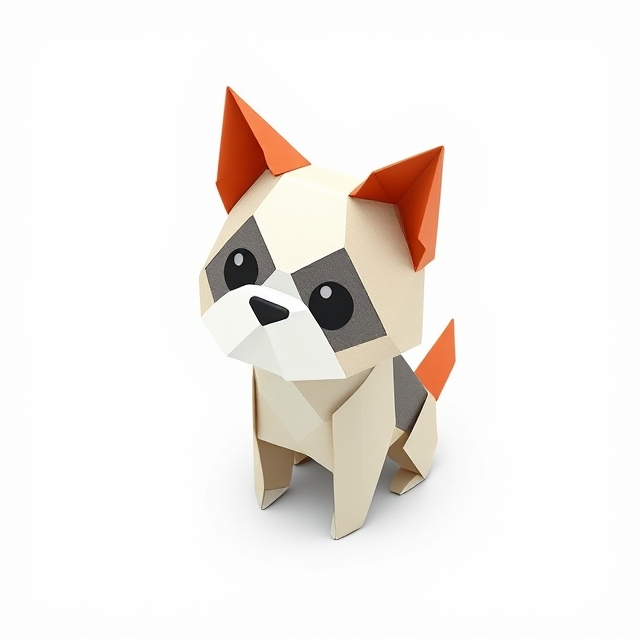
Frog
Materials:
1 square piece of paper (6x6 inches or 15x15 cm works well)
Instructions:
- Step 1: Start with a Square
Begin with the paper colored side up (if using colored paper).
- Step 2: Fold Diagonally
Fold the paper in half diagonally from corner to corner, and crease well. Unfold.
Repeat by folding the paper along the other diagonal (from the other two corners), crease, and unfold. You should have two diagonal creases that form an "X."
- Step 3: Fold in Half Horizontally and Vertically
Fold the paper in half horizontally (top edge to bottom edge), crease well, and unfold.
Fold the paper in half vertically (left edge to right edge), crease well, and unfold. You should now have a grid of creases.
- Step 4: Collapse the Paper into a Square Base
Using the creases, collapse the paper into a square base (also called the “preliminary base”). To do this, push in the sides towards the center, and flatten the paper into a smaller square with a pointy top (the base should resemble a kite shape).
- Step 5: Fold the Top Corners Down
Fold the top corners of the square down to the center point of the square. Crease well, then unfold. This will create a new crease that marks where the frog’s head and back will be.
- Step 6: Fold the Bottom Edges Up
Fold the bottom edges of the square up to the center crease, but only about halfway. Crease well. This step forms the frog’s legs.
- Step 7: Flip the Paper and Fold the Bottom Up Again
Flip the paper over and fold the bottom point (of the square) up to the center crease. This reinforces the frog’s body and legs.
- Step 8: Create the Legs
Now, fold the bottom edges (on both sides) towards the center again, but this time, let them overlap a little in the middle. This will form the frog's back legs.
- Step 9: Form the Frog’s Head
For the frog’s head, fold the top part of the paper down, about a third of the way. This creates the shape of the frog’s face.
Fold the top point of the head back up slightly, creating the frog’s nose.
- Step 10: Make the Frog’s Front Legs
Fold each of the side corners of the frog's body to the center, creating the front legs. These will point outward.
- Step 11: Final Shape and Adjustments
To create the frog’s "jumping" shape, gently pull apart the body and head, and push out the back legs. The frog’s front legs should stay folded, while the back legs should stick out slightly to give it the characteristic look.
Adjust the folds, especially the legs, to give the frog a more dynamic, jumping pose.
Now you have an origami frog! This model requires a bit more precision, particularly when folding the legs and head, but with practice, you can create a realistic-looking frog ready to "jump." Once you’ve mastered this version, you can experiment with larger papers or create a series of frogs in different positions.