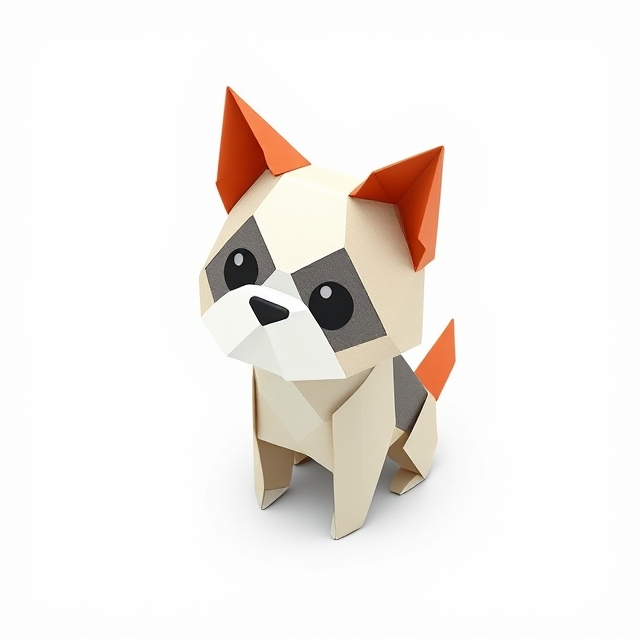
Techniques
Origami, as a form of paper art, relies on a variety of techniques that help transform a flat sheet of paper into intricate and dynamic shapes. For intermediate-level origami, understanding and mastering a range of folds and techniques is essential to creating more complex models. One of the most fundamental techniques is the mountain and valley folds. These two types of basic folds are the foundation for most origami models. A mountain fold is made by folding the paper so the crease forms a "mountain" shape, while a valley fold creates a "V" shape. Understanding these folds and their precise application is crucial for building structure and dimension in intermediate-level designs.
Another important technique is the reverse fold, which allows for changes in direction in the paper, creating intricate shapes like the limbs of an animal or the petals of a flower. This fold is performed by opening up the paper slightly, folding in the opposite direction along an existing crease, and then flattening the paper. Mastery of the reverse fold is critical when creating more realistic or detailed origami models. The petal fold is another technique commonly used in intermediate origami. This fold is essential for creating symmetrical flaps that can be expanded or collapsed to form shapes like flowers or the body of certain animals. It involves folding a corner of the paper to the center, then opening the layers of the paper to create a petal-like structure, which is often used in designs like the lotus flower or crane.
For more advanced intermediate models, techniques like the pleat fold and squash fold become important. The pleat fold, commonly used in creating pleated clothing or fan-like structures, requires folding the paper back and forth, like an accordion, to form a series of equal folds. The squash fold is another advanced technique used to flatten out multiple layers of paper into a single unit, often to form the rounded shape of flowers or animal bodies. Both folds are used frequently in models that require layered or 3D structures, adding depth and dimension.
Finally, lock folds and sink folds are advanced techniques that help stabilize parts of the model. A lock fold is used to tuck one part of the paper into another to secure pieces together, while a sink fold involves pushing part of the paper into itself to create complex shapes. Mastering these folds will allow for more complex and three-dimensional models, as they allow multiple layers of paper to interact and fit together seamlessly. Overall, intermediate origami requires a combination of creativity and precision, as understanding these folds and their applications will enable you to tackle more detailed and realistic models.